The commercial space economy is no longer a linear supply chain, rather an interconnected ecosystem where research, manufacturing, data, national security and cultural engagement converge in orbit. Industries that once operated far from aerospace – biotech, materials science, semiconductors, AI, even media and retail – now view space as a strategic operating environment. But despite demand from dozens of sectors, access to orbit has remained fragmented, forcing organizations into complex workflows to get a single experiment or payload on orbit.
That fragmentation has broader implications. As China expands its Tiangong Space Station and openly courts international partners, the stakes for U.S. leadership have never been higher in low Earth orbit. Without a next-generation American platform that exceeds Tiangong in scale, sophistication and commercial utility, the global center of gravity will shift toward Beijing. Sustaining U.S. leadership – economically, scientifically, diplomatically and strategically – requires an American station that is unquestionably superior.
Starlab is that station.
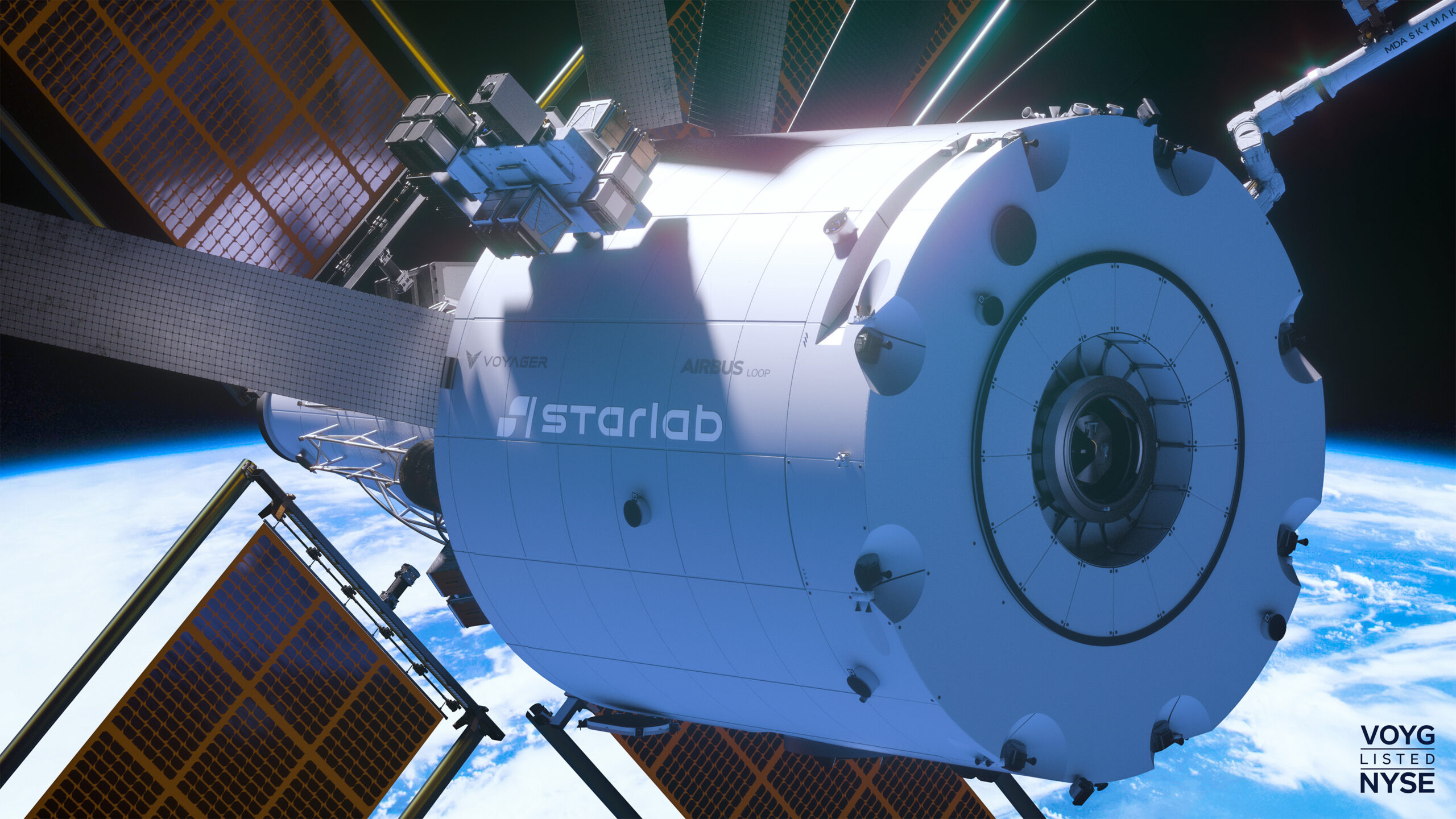
As the next-generation commercial space station, Starlab is designed to serve not just one customer type, but an entire constellation of markets. With its unmatched internal volume equivalent to that of the ISS, put to orbit in a single launch, modular facilities, advanced lab environments, autonomous systems and integrated logistics, Starlab creates a full commercial pipeline from Earth to orbit and back.
Industries across the world are already mapping their most ambitious ideas to Starlab. Biotech companies can accelerate research cycles with purer protein crystallization, regenerative medicine studies and stem cell experimentation that gravity simply doesn’t allow.
Pharmaceutical developers can test drug formulations in microgravity, exploring mechanisms that lead to new therapies, reducing false positives and negatives and therefore enabling faster clinical pathways. Meanwhile, materials scientists gain access to an environment where alloys, semiconductors and optical components form with fewer imperfections, enabling breakthroughs in photonics, advanced electronics and quantum technologies.
Earth-observation companies can use Starlab as a persistent, stable node for long-duration sensors, next-generation optical instruments and real-time analytics, advancing predictive models for agriculture, oceans and natural disasters. Semiconductor and optics companies can produce ultra-high-purity materials and next-generation components that support the demands of AI-scale computing and hyperscale data infrastructure.
Defense and national security partners gain a sovereign, U.S.-led platform for dual-use technology development, with everything from autonomous systems and resilient sensing to materials and human-factors research aligned with long-duration missions.
Starlab also supports training, experimentation and technology readiness in a controlled environment that aligns with U.S. strategic interests and strengthens allied industrial bases. Educational institutions, universities and STEM programs can access Starlab for student-driven research, global learning experiences and real-time educational content. The station becomes a platform for inspiring the next generation of scientists, engineers and explorers, enabling hands-on experiments that will shape the workforce required for future lunar, Martian and deep-space operations.
Even markets beyond traditional science, such as brands, content creators, media studios and experiential companies, can use Starlab as a frontier for storytelling, advertising, cultural expression and immersive content. From high-production filming to microgravity product launches, space is becoming a creative canvas.
Starlab is more than a successor to the ISS. It is the first of many space stations that will form a multi-sector engine for economic growth, scientific discovery and global collaboration. Starlab supports many markets and unlocks the full commercial potential of low Earth orbit.