As the International Space Station approaches retirement, the United States and its partners face a defining question: what comes next?
For more than two decades, the ISS has provided the size, infrastructure and operational capacity that enabled thousands of investigations, sustained human presence and unlocked early commercial markets. Any successor must meet a simple but often overlooked requirement: it must be big enough. Research volume, crew operations, manufacturing throughput, national-security missions and commercial activity all depend on habitable scale.
Starlab is built for that mission, with habitable volume that exceeds China’s Tiangong space station. The comparison underscores the importance of this scale, which is foundational to how an orbital platform functions. A station with limited internal volume cannot support parallel research tracks, meaningful crew rotations, industrial-scale microgravity research and manufacturing or the integration of multiple international users.
Constrained stations force tradeoffs between science, exploration and commercial activity, ultimately limiting the economic value of low Earth orbit. A post-ISS world demands a platform that can do all three without compromise.
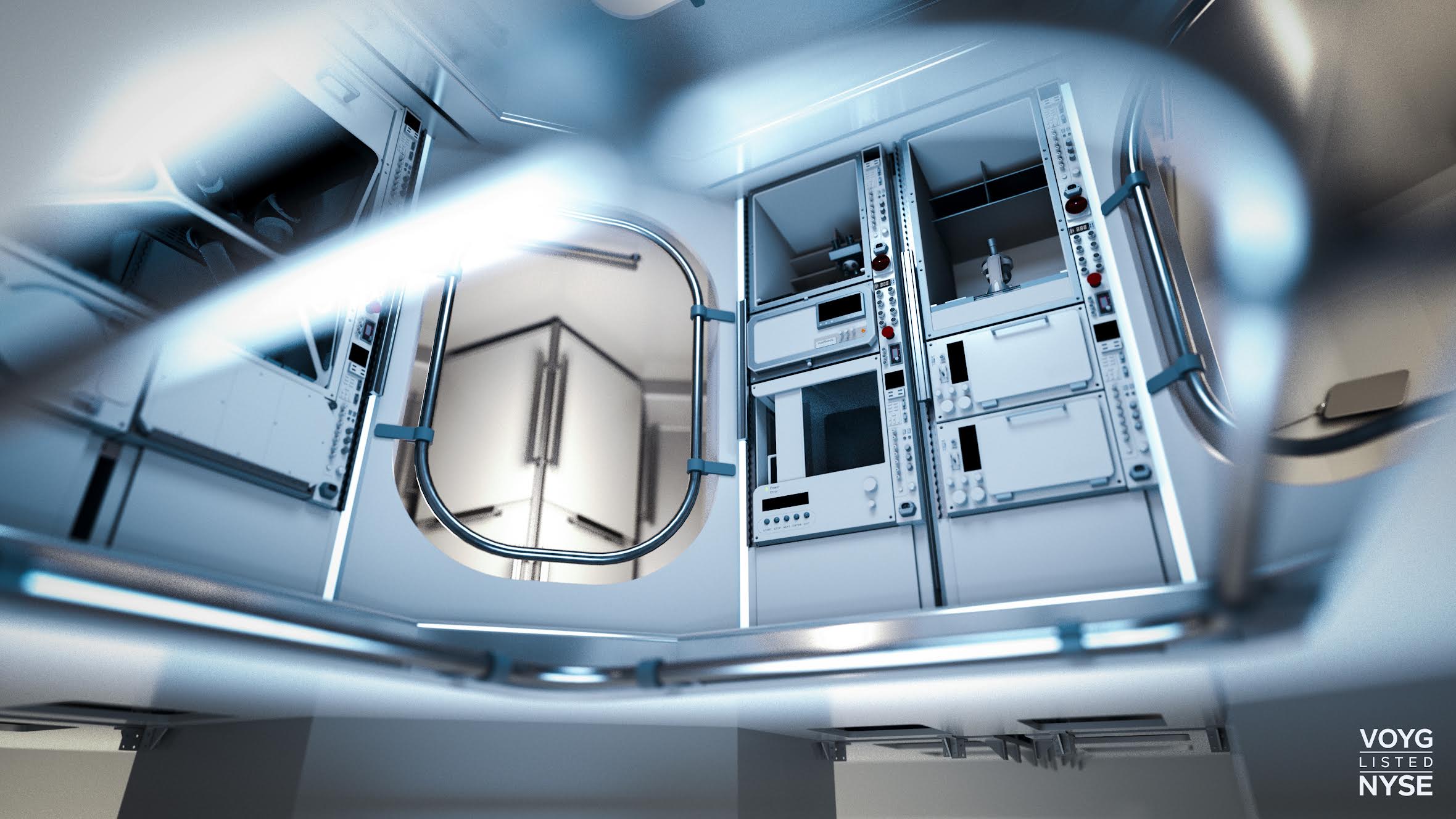
Starlab’s design solves this challenge by providing a single, integrated habitat with the volume necessary to accommodate laboratories, payload racks, manufacturing modules, life-science facilities and mission-critical systems, all without forcing users to compete for space. The larger volume gives users greater operational flexibility, more sustained crew presence and broader scientific and industrial opportunity. It aligns with the level of access and capacity NASA and its partners have become accustomed to with the ISS and that the global space economy now depends on.
The station’s advanced environmental control and life support systems, robotics, on-orbit autonomy and mounted external platforms are made possible by its size; they cannot be meaningfully scaled down without sacrificing mission capability. The result is a station that supports continuous human presence, long-term investigations and multi-market use.
Starlab’s advantage extends beyond volume. Many commercial concepts are pursuing smaller, modular stations that may support specific missions but lack the integrated infrastructure needed to immediately operate as a full ISS replacement. In a single launch configuration, Starlab launches as a complete, unified station that does not rely on multiple future modules, uncertain timelines or fragmented capability delivery with added in-space assembly complexities.
Starlab’s core architecture – large, proven before launch with testing on Earth and self-contained – enables earlier operations and immediate availability of full research capability on orbit.
This matters because the transition from ISS to commercial platforms cannot suffer a capability gap. The ISS has been the backbone of microgravity R&D, national-security demonstration missions and industrial-base development. Without a station of similar scale and operational tempo, the United States risks losing ground to strategic competitors, stalling commercial progress and slowing the scientific output that informs everything from advanced materials to biopharmaceutical breakthroughs. Starlab is designed to ensure that never happens.
The global space economy is entering a phase defined by sustained operations, not experimentation. Demand for microgravity access continues to rise across industries. Meeting that demand requires a station built for throughput – one with the volume, redundancy and crew capability to run multiple markets in parallel.
As the ISS era draws to a close, Starlab provides the size, infrastructure and operational readiness the world expects from the next generation of human spaceflight. Its greater habitable volume positions it as the only platform capable of fully replacing the ISS and enabling the next chapter of the orbital economy.
Starlab is the foundation enabling a vibrant LEO commercial space economy to thrive for decades to come.