Back
What It Will Take for America’s Industrial Base to Deliver the Golden Dome
What It Will Take for America’s Industrial Base to Deliver the Golden Dome
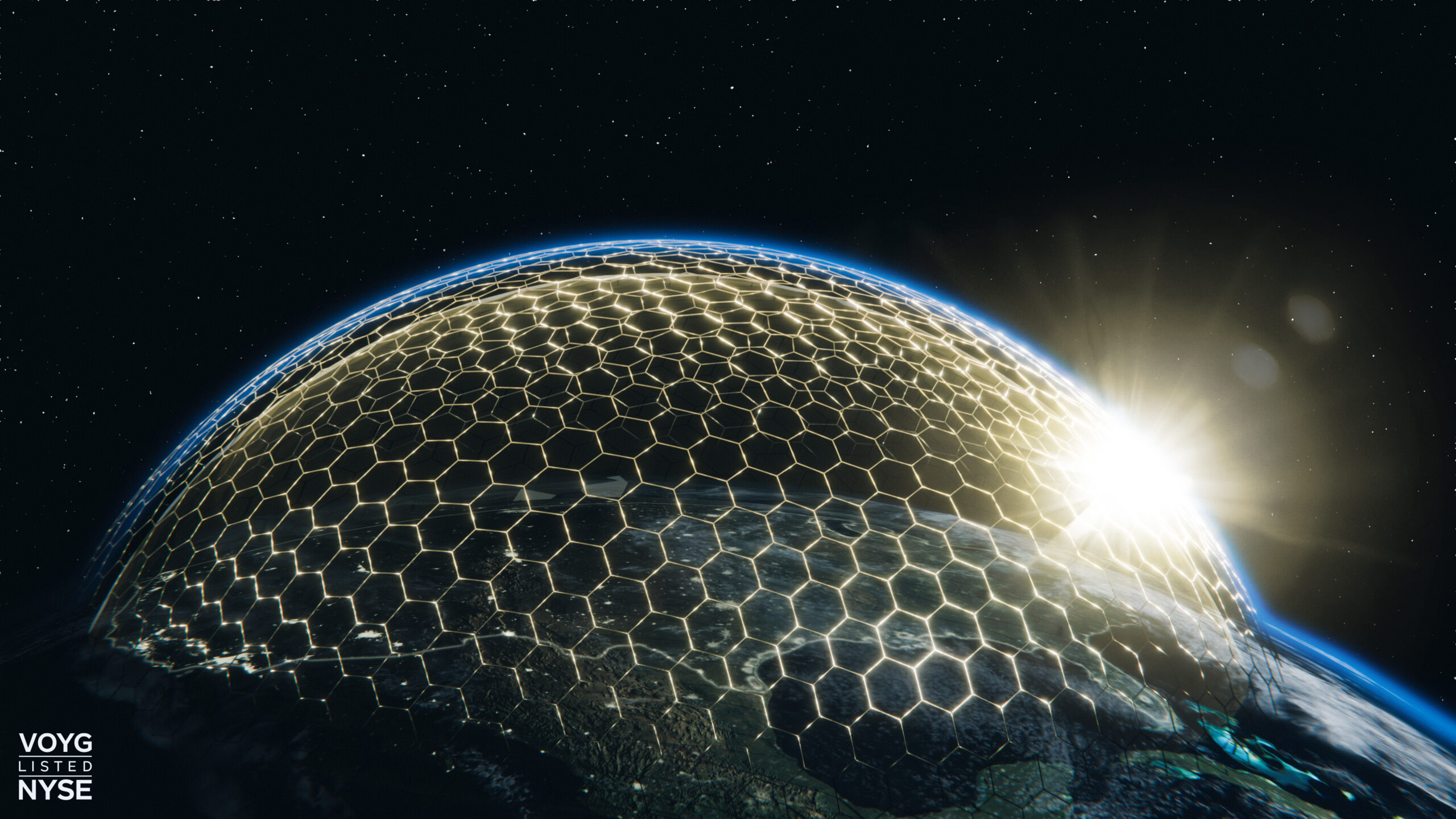
As global missile threats accelerate – from hypersonic glide vehicles to advanced ballistic and cruise systems – the United States is moving toward a new defensive paradigm known as the “Golden Dome,” a distributed, space-enabled architecture designed to sense earlier, decide faster and act with precision across every domain.
Delivering this architecture will require an industrial base capable of producing propulsion, energetics, advanced electronics, in-space maneuver systems, edge computing and secure communications autonomously and at scale. The challenge is no longer invention; it is capacity, speed and supply-chain resilience.
Delivering a system-of-systems
Golden Dome is not a single program but a system-of-systems. It depends on orbital sensors, maneuverable platforms, terrestrial radars, high-bandwidth crosslinks and autonomous decision frameworks operating as an integrated whole. For decades, the U.S. defense ecosystem excelled at building exquisite, low-rate systems tailored for specific missions. The threats the nation faces today demand something different: high-volume production, rapid iteration and a sovereign industrial base capable of delivering mission-critical hardware with predictable throughput.
“Golden Dome only becomes real if industry can deliver at operational tempo,” said Matt Magaña, president of Space, Defense and National Security at Voyager. “We need propulsion systems that can be built in quantity, energetics that have true depth of supply and electronics that are radiation-tolerant and AI-enabled. If a component is essential to early warning, targeting or maneuver, we need multiple qualified U.S. sources, not a single point of failure. That’s the scale of commitment this mission requires.”
Space: a critical layer to Golden Dome
Space is where early detection and persistent coverage give commanders the margin to outpace advanced threats. The industrial base must produce satellites capable of precise maneuverability, low-signature detection and secure on-orbit data processing. These systems must operate autonomously, adapt to changing threat conditions and pass information seamlessly to ground, air and maritime assets.
The data burden and time criticality of modern missile defense demands a hybrid architecture enabled by edge computing. Hypersonic and maneuverable threats compress decision timelines to seconds, leaving little room for centralized command-and-control. The Golden Dome framework must process and fuse data at the edge, enabling assets in space and at altitude to make time-critical assessments while maintaining human oversight. That requires radiation-tolerant processors, AI-enabled autonomy and secure software pipelines that can update rapidly without compromising mission integrity.
“It’s not enough to have sensors; you need architecture-level intelligence where AI is intrinsic,” said Paul Tilghman, chief technology officer at Voyager. “Future missile defense will rely on edge intelligence across every layer: satellites, interceptors, airborne systems and maritime sensors. The industrial base must produce hardware and software that can handle that complexity in real time. We are entering an era where autonomy isn’t optional, but fundamental to maintaining deterrence.”
Enabling the industrial base
These technical requirements must be supported by a resilient, sovereign supply chain. Long-term contracting and predictable procurement cycles will enable suppliers to invest in new facilities, workforce pipelines and production automation. Industrial-policy tools, such as multi-year funding, public-private partnerships and university collaboration, will also be critical to building depth in the talent base, particularly in fields such as energetics, advanced manufacturing, AI and materials science.
No single company will deliver Golden Dome. Its success depends on a unified industrial ecosystem of traditional primes, commercial space companies, startup innovators and academic partners aligned around a shared mission. Primes bring system-integration experience. New-space companies bring speed, autonomy and space proficiency. Universities supply research and workforce development. Together, they form the foundation for a modernized missile-defense ecosystem.
Voyager represents this emerging “neo-prime” model, integrating propulsion, energetics, advanced electronics, on-orbit maneuver systems and mission-management capabilities under one roof. The company is scaling propulsion lines for orbital systems and intercept enablers, and building high-reliability electronics for contested environments, all critical systems that underpin Golden Dome.
“Golden Dome is executable,” Magaña said. “But it takes an industrial base built for speed, scale and resilience. Companies like Voyager exist to close those gaps, bringing together the propulsion, energetics and electronics that make modern defense architectures real.”
Tilghman added that the stakes extend beyond any single program.
“This is about ensuring the United States can deter and defeat the threats of the next decade,” he said. “Building Golden Dome is not just an engineering challenge; it’s an industrial-base imperative.”