The transition to commercial low-Earth orbit infrastructure represents one of the most significant opportunities in the history of human spaceflight.
As successor platforms to the International Space Station take shape, Starlab stands out for its combination of research scale, commercial flexibility and global partnerships. The station is engineered to carry the legacy of continuous human presence in orbit via the ISS into a new era, while opening the doors of the space economy to a wider range of participants than ever before.
“Our goal is to ensure the next generation of low Earth orbit infrastructure supports the same level of research and collaboration the ISS made possible,” said Marshall Smith, CEO, Starlab. “At the same time, we are building a platform designed for growing commercial demand.”
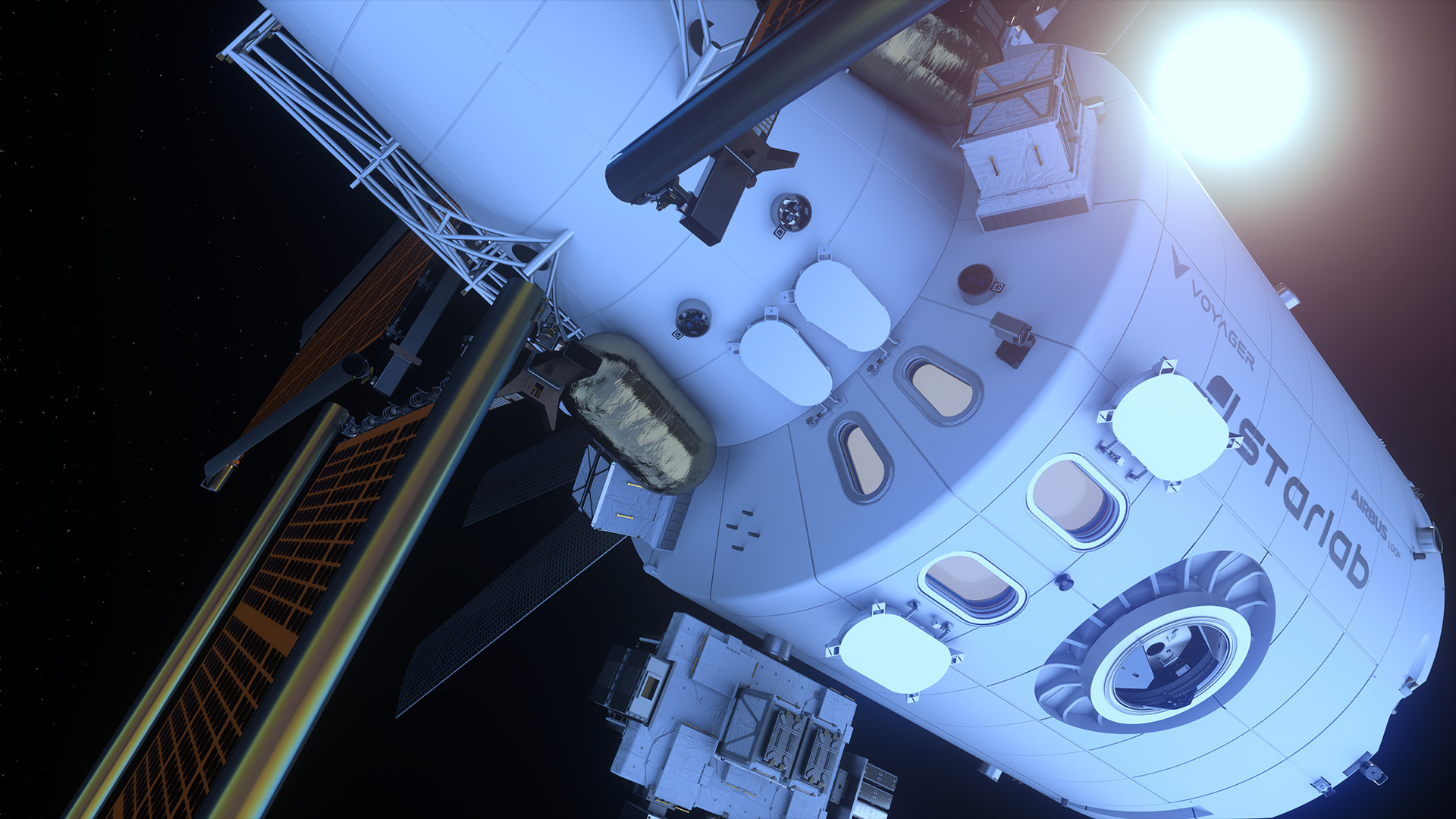
That ambition is reflected in Starlab’s design. Nearly 400 cubic meters of pressurized volume houses a dedicated laboratory with 13 internal payload platforms and capacity for 130 Middeck Locker Equivalent experiment slots – enough to run numerous investigations and commercial projects simultaneously. An additional 18 external payload locations extend that capability directly into the space environment, where organizations can test technologies under real orbital conditions.
The result is a platform purpose-built for throughput: more experiments, more partners and more opportunities running in parallel.
Human presence anchors it all. Starlab supports a continuous crew of four astronauts, with the ability to host up to eight for shorter-duration missions or turn over operations. That sustained presence enables the hands-on oversight that complex research programs require, keeping investigations on track and laboratory systems operating at full capacity.
Starlab’s global partnership brings depth to that foundation. Airbus, Mitsubishi Corporation, MDA Space, Palantir and Space Applications Services each contribute specialized capabilities, from station development and advanced robotics to data systems and manufacturing.
Voyager is also investing in the broader ecosystem that makes space research meaningful on Earth. The Voyager Institute for Space, Technology and Advancement (VISTA) is actively building the pipeline connecting ground-based innovation to on-orbit application to accelerate workforce development, technology maturation and commercial opportunity. With The Ohio State University as the anchor educational hub, VISTA’s ecosystem now includes the University of Connecticut, the University of North Dakota and NASA’s Glenn Research Center, as well as international science parks and partners.
“VISTA exists to make sure the benefits of the space economy reach beyond the handful of organizations that have historically had access,” said Jeffrey Manber, special representative to the CEO, Voyager. “By partnering with universities and research institutions now, we are building the talent and the tools that will define what is possible on platforms like Starlab for decades to come.”
The space economy is expanding. The platforms that will define its next chapter are those capable of sustaining serious research, supporting international collaboration and scaling with demand. Starlab is designed to be one of them.