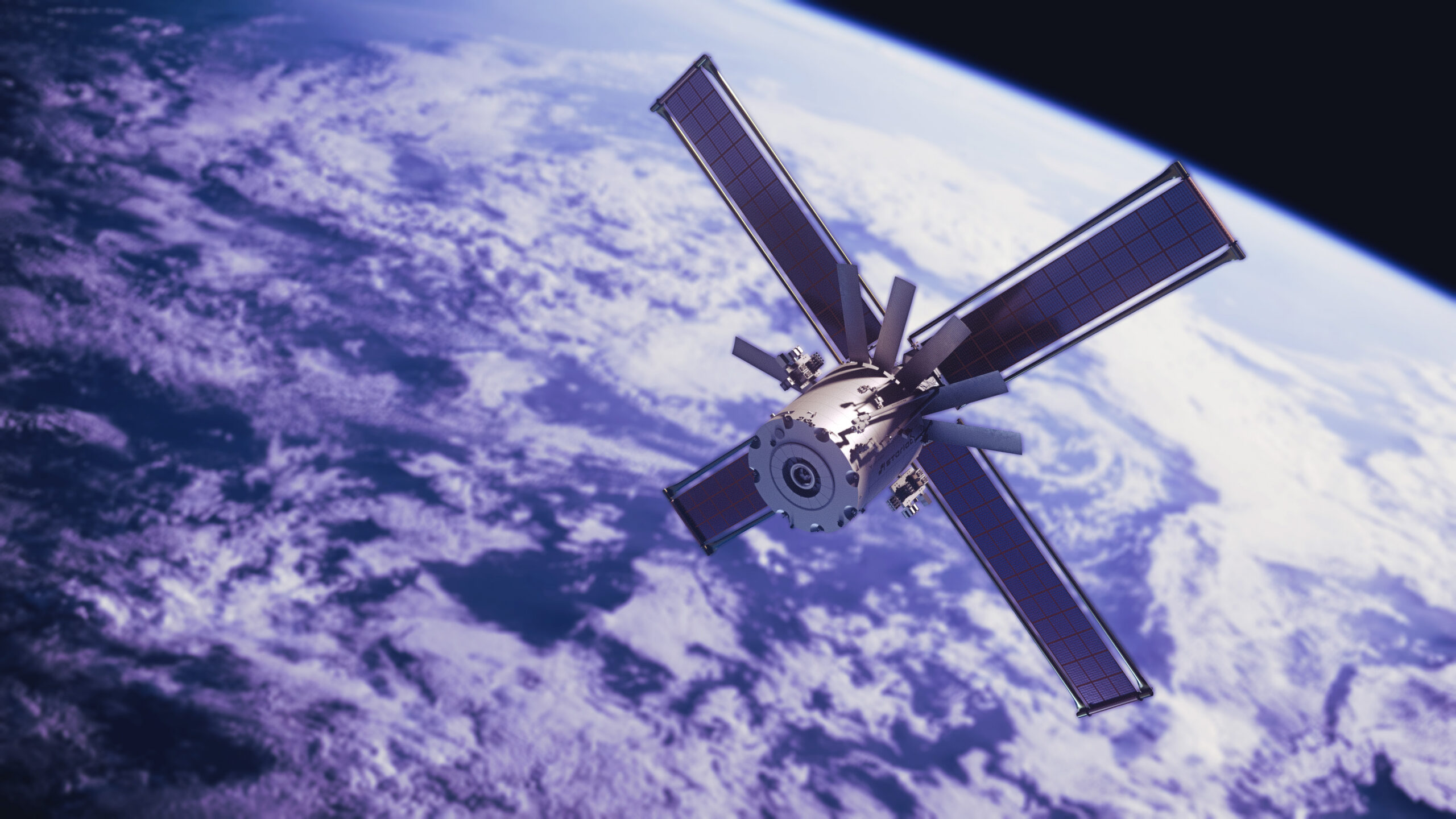
Voyager enables low-Earth orbit commercial economy today and into the future
The leadership America has built in space, in low-Earth orbit specifically, must be built, maintained and defended. Whoever is leading in LEO will have the advantage in future lunar and deep-space missions, primarily thanks to the proving ground LEO has shown itself to be. The research and missions conducted in LEO stress test life support systems and refine protocols, so it’s mission-critical the American advantage there is maintained across industry shifts and any future transitions.
With Starlab, Voyager is building the infrastructure to accelerate that advantage.
“Starlab accelerates scientific breakthroughs that transform life on Earth, advances human exploration and embodies what it means to power the next era of national strength and human space presence,” said Marshall Smith, CEO of Starlab. “Starlab is the physical manifestation of what Voyager was founded to do: build mission-ready systems that protect today and make tomorrow possible.”
Proven Spaceflight Heritage
Starlab is Voyager’s proposed next chapter of commercial low-Earth orbit, but it isn’t a standalone story. It’s the culmination of Voyager’s decades of spaceflight heritage across more than 1,400 missions managed for commercial, academic and government customers.
With 12 active International Space Station research facilities, including Bishop Airlock, the first commercial airlock on the Space Station, Voyager streamlines every phase of mission management for the Space Station: planning, payload design, safety, launch booking, crew training and on-orbit operations.
Through a renewed contract with NASA’s Johnson Space Center, signed in February 2026, Voyager will continue to deliver end-to-end mission services for the Space Station until 2030. The contract already has customers, and comes on the heels of more than 50 successfully completed task orders under the predecessor contract.
In Spring 2027, Voyager’s latest payload platform, NEL, will launch to the Space Station. NEL will be mounted to one of Bishop Airlock’s six external payload hosting sites, allowing for 700 watts of power, a 1,300 percent increase from the previous platform. Due to customer demand, a second NEL platform will be added in late 2027.
The company was also awarded NASA’s seventh Private Astronaut Mission in March 2026, which will launch as VOYG-1 no earlier than 2028.
Scaling Commercial Capability
Starlab, Voyager’s next-generation commercial space station, is designed to continue the company’s history of facilitating access to space, carrying forward all the same capabilities of the Space Station. With nearly 400 cubic meters of pressurized volume to support operations for the next three decades, Starlab will function as a complete system from Day One, launching as a single, unified platform rather than assembling modules incrementally over time. This core architecture enables earlier operations and immediate availability of full research capacity.
Starlab houses a dedicated laboratory with 13 internal payload platforms, 18 external payload locations and capacity for 130 Middeck Locker Equivalent experiment slots. The station supports research across industries, including production of ultra-pure crystals, advanced alloys and next-generation semiconductor materials that are difficult or impossible to manufacture on Earth. Purer materials directly impact high-speed electronics, communications systems, advanced aerospace components and emerging quantum technologies.
Starlab’s commercial payload space is already fully reserved, proving the demand for LEO access.