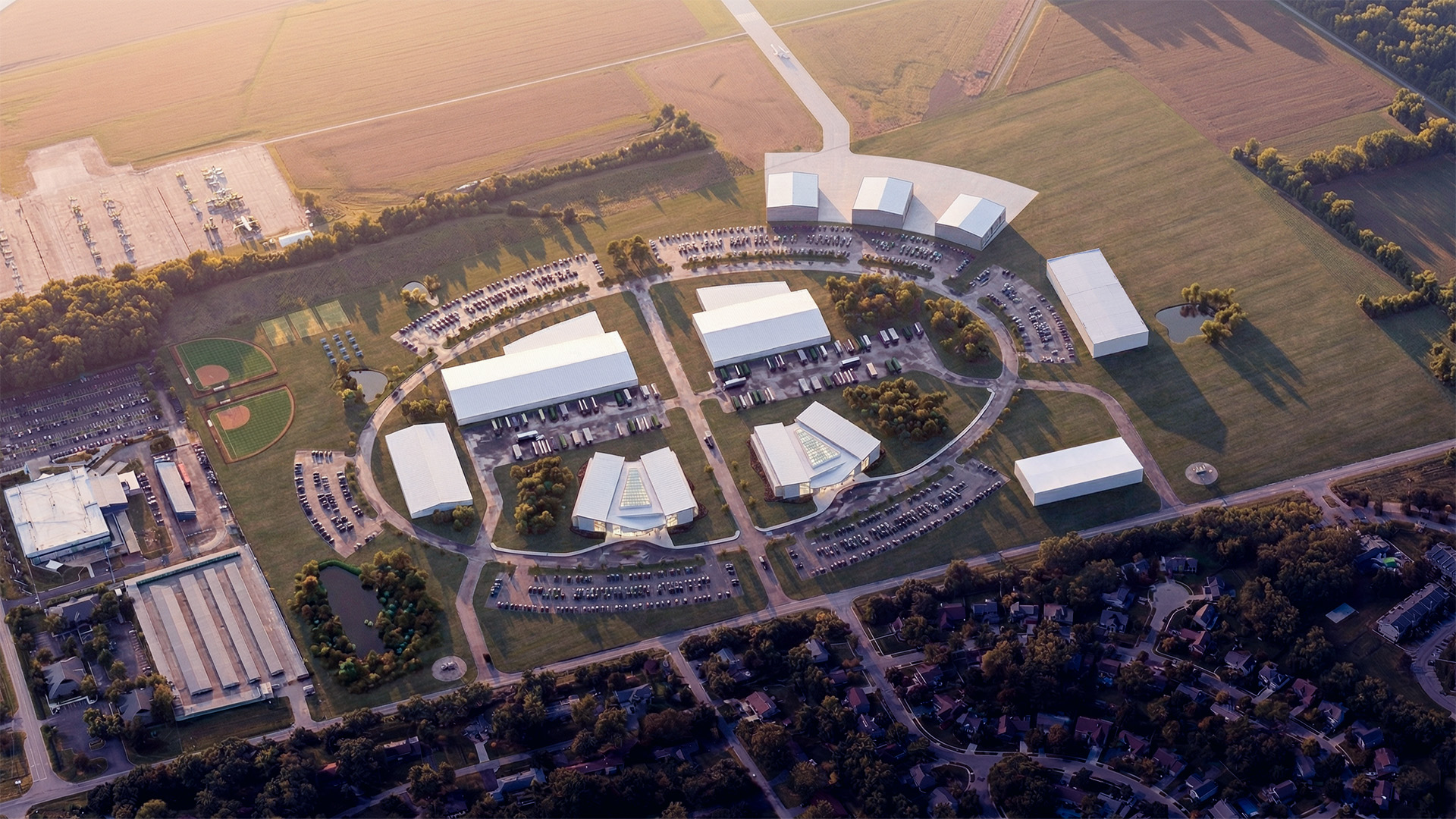
The Voyager Institute of Science, Technology and Advancement is the ground infrastructure that will turn the rocket revolution into a sustainable commercial space economy
Rockets are launching at a faster cadence and at a lower cost than at any point in history, primarily driven by commercial companies. What used to be the exclusive province of nations and primes is now a service startups and universities can buy into — if they know how.
For the current rocket revolution to make any difference, there needs to be a parallel revolution on the ground. Infrastructure, expertise and access need to become as available as the rocket itself.
“A rocket takes payloads to orbit, but we enable great ideas to find their seat,” said Matt Magaña, president of Space, Defense & National Security, Voyager. “The Voyager Institute of Science, Technology and Advancement builds on our long mission management heritage and the commercial model we’ve built to make space achievable for more customers.”
The Rocket Revolution
The cost of reaching orbit is one of the largest determiners in the space economy. The price of everything from satellite constellations to space stations is dependent, first and foremost, on that launch price. Reusable rockets costs have plummeted 96% since the industry started in 1960, allowing more customers than ever to afford spaceflight. That demand has launch companies competing to develop more reusable launch vehicles, which could reduce costs even further through competition.
On August 20, 2026, President Trump signed The National Space Transportation Policy presidential memorandum, setting a target of over 1,000 space launches and reentries annually by 2030. The goal is ambitious but shows the financial momentum behind the commercial space industry and the infrastructure being built to support a sustained human presence in space.
Launch is a critical piece of the equation, but it only solves how to get to orbit, not how customers get ready for orbit. Payload safety reviews, integration, on-orbit operations and funding pathways are where customers from industry sectors without spaceflight experience could stall out.
Voyager has served as implementation partner for more than 1,400 missions in orbit, providing the knowledge and support customers need to get to space. VISTA takes that drive to open access to space even further by not just putting missions into space but enabling ideas on the ground to become research worthy of making it to space.
Access is the Innovation
Anchored at The Ohio State University, VISTA is a first-of-its-kind U.S. science park devoted to in-space research and manufacturing as well as lunar research. VISTA is designed to be open, flexible and accessible, lowering barriers to entry for companies that previously lacked a clear pathway into the space economy. Just as reusable rockets turned launch into routine infrastructure, VISTA turns space capability into shared infrastructure.
VISTA tenants gain access to the hardware and services provided by The Ohio State University, allowing concepts to be tested and turned into flight-ready payloads. There’s also access to investors, mentors, grant writing services and strategic marketing — everything that customers need to create a clear pathway to orbit, whether the ISS today or commercial space stations like Starlab tomorrow.
South Korea-based Space LiinTech is one of the earliest examples of VISTA’s pipeline in action. The company came to Voyager with their protein crystallization study, one of the most active research categories aboard the ISS since crystals grow larger and with fewer defects in microgravity. Voyager served as an implementation partner for the research. After the success of the first mission, five more were contracted. Now, Space LiinTech is a VISTA tenant.
Repeat business like this is possible because launch has become frequent and affordable enough to plan a research program around it. In many ways, the increased access for science to reach orbit, both through what happens on the ground and on a rocket, is the biggest innovation of all.
“The commercial space economy begins long before a payload is launched to orbit,” said Jeffrey Manber, special representative to the Chairman & CEO, Voyager. “To grow a sustainable commercial space economy, the industry needs a seamless pipeline that can turn good ideas into real missions in orbit. That’s what VISTA is designed to do.”